
Where to Park a Bike So It Stays Up
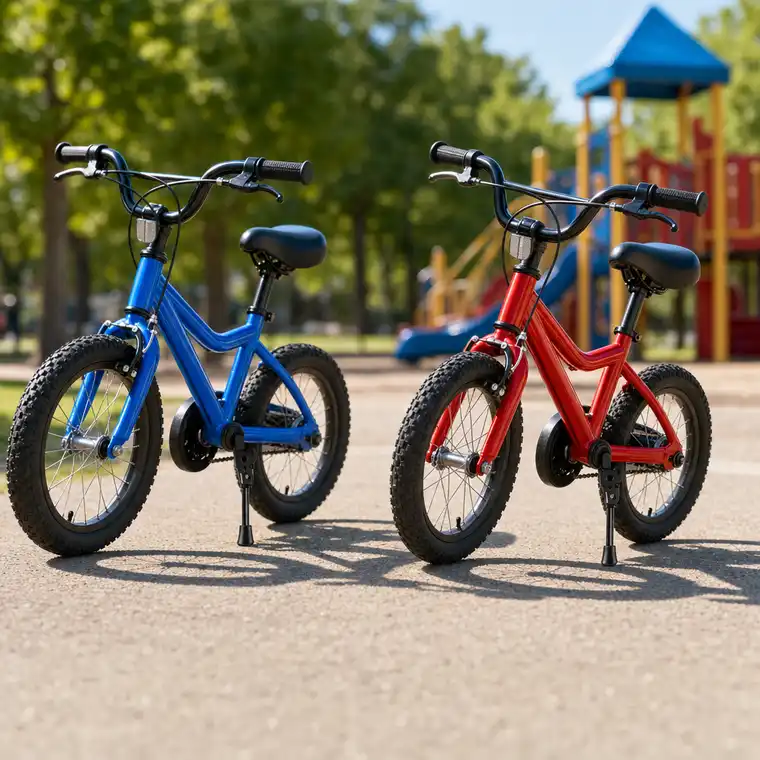
There is a particular kind of irritation in walking back down the driveway and finding the bike on its side. Nothing failed. The stand is still bolted where you put it, the leg is still down, the bolt is still tight. The bike simply stopped being balanced while you were gone.
Almost every one of those falls traces back to the spot the bike was parked in rather than to the part holding it up. Choosing that spot well takes about five seconds, and this page is a description of what those five seconds decide.
What a kickstand is doing while the bike is parked
A parked bike is not balanced, and balanced would be terrible: a bike standing perfectly upright is a coin on its edge, and the first breath of wind decides which way it goes. A kickstand holds the bike deliberately off-vertical, leaning onto the leg, so gravity is permanently pulling the frame into the stand rather than away from it. The lean is not a side effect. The lean is the mechanism.
Which is why the failures are so undramatic. The bike does not get knocked over so much as it slowly stops leaning, until the frame passes its own balance point and goes the other way, where nothing catches it. Every side kickstand carries the bike on a contact patch about the size of a coin, ours included, and the molded rubber foot is flared rather than pointed so it spreads that patch as wide as a part this size can. The lean angle is set once, when the stand goes on, and the installation guide covers getting it right at the bench.
Average across 416 verified buyer ratings on the kids range and 1,099 on the adult range
— Kickaroo verified buyer ratings, 2026
Ground that holds, and ground that gives way
Soft ground catches people out because it does not fail immediately. Set a bike down on a lawn in July and it stands there looking perfectly settled. The foot is already sinking, but at the speed grass compresses under a steadily applied load, which is slow enough to look like nothing is happening. Come back in an hour and the bike is over. That delay is what makes it feel like bad luck rather than a parking choice. Loose gravel fails the opposite way and just as quietly: the foot sits on two or three stones free to roll, and a gust or a passing dog shifts one of them.
| What you are parking on | What happens under the foot | What to do about it |
|---|---|---|
| Concrete, asphalt, a garage floor | The foot presses and nothing moves | Park anywhere on it |
| Packed dirt or a paving slab | Firm enough to hold the foot where you put it | Keep off the softer edges |
| Lawn, especially after rain | The foot sinks slowly, so the lean deepens | Use the paved edge, a flat stone or a board |
| Loose gravel or bark chips | The foot sits on pieces free to roll | Scuff a patch clear with a shoe |
| Wet leaves over a hard surface | The leaves slide across the surface underneath | Sweep the spot with a foot first |
The last three rows share one answer: give the foot a hard flat thing to stand on. Households that park on grass tend to end up with one board that lives permanently where the bikes go.
A slope changes the lean you set at the workbench
Of those two, the second is the one that hurts. A bike leaning too far is at least still loading its stand, and usually just stays there looking untidy. A bike sitting nearly upright has been moved to the edge of the balance point the lean existed to keep it away from, and a knock in the wrong direction takes it all the way over.
The fix costs nothing: point the bike straight up or straight down the slope rather than across it. Along the fall line the ground under both tires and the foot tilts the same way, the sideways lean is untouched, and the stand holds the angle it was set to. Garages are the same trick indoors, because many garage floors are laid with a slight fall toward the door so water runs out rather than in.
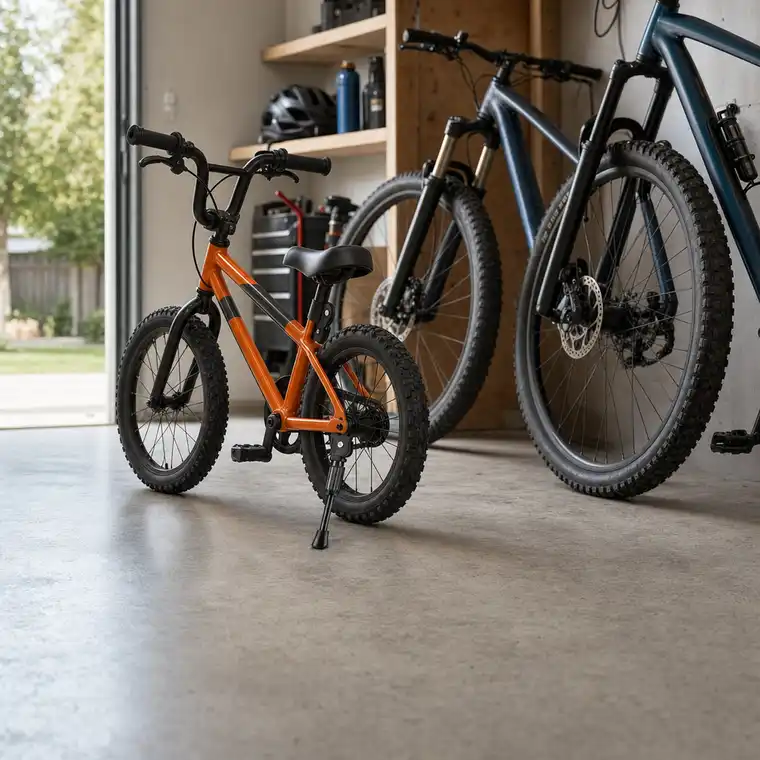
Turn the front wheel before you walk away
With the wheel straight, the bike is a trolley resting against a prop: any push along its length rolls it, and rolling it moves the frame until the foot is no longer under the part it was holding up. A downhill slope does the same thing slowly, without anyone pushing. With the wheel turned, that push tries to pivot the whole bike instead, and meets far more resistance.
Turning toward the stand rather than away matters for a second reason. A bag, a basket, a lock or a helmet hooked over a lever swings across to the stand side as the wheel turns, putting that weight over the leg holding the bike up. On a heavier machine the habit matters more, and the electric bike kickstand page covers what changes when the frame carries a battery and a motor.
Weight of the adult stand, 0.397 kg, in thickened aluminum alloy
— Kickaroo product specification, 2026
What is on the bike moves where it balances
Picture the bike as it was when the stand went on: bare frame, empty rack, nothing on the bars. That is the bike the lean was chosen for. Hang a full grocery bag off the right-hand side of the rack, away from the stand, and the machine has been pulled toward the one direction its kickstand cannot do anything about.
Three habits cover it. Load the stand side first when you have a choice. Keep heavy things low, on a rack rather than the bars, because weight carried high moves the balance point further for the same load. And take something genuinely heavy off before you park rather than after. A bike used daily with panniers is worth re-checking the lean on, and the trade-offs between a leg you can reset and a leg cut to one length are in adjustable versus fixed bike kickstands.
Parking through the wet and cold months
The autumn version is the sneakiest, because the parking spot looks identical. The corner of the yard that took a bike every day in July has been rained on for a fortnight, and the top two inches no longer support anything. The first sign is the bike on its side. Households that ride year-round solve this once, by moving the everyday spot onto hard standing for the winter.
Frost adds a variation worth knowing. Ground frozen hard in the morning is excellent to park on, better than in summer. The same ground at three in the afternoon has thawed at the surface while staying solid underneath, and a foot that pressed into a firm crust at breakfast punches straight through it later. Autumn is also the sensible moment for the bolt check that belongs at the start of each riding season, and buyer photos of finished installs are on the reviews page.
Teaching a child where to park a bike
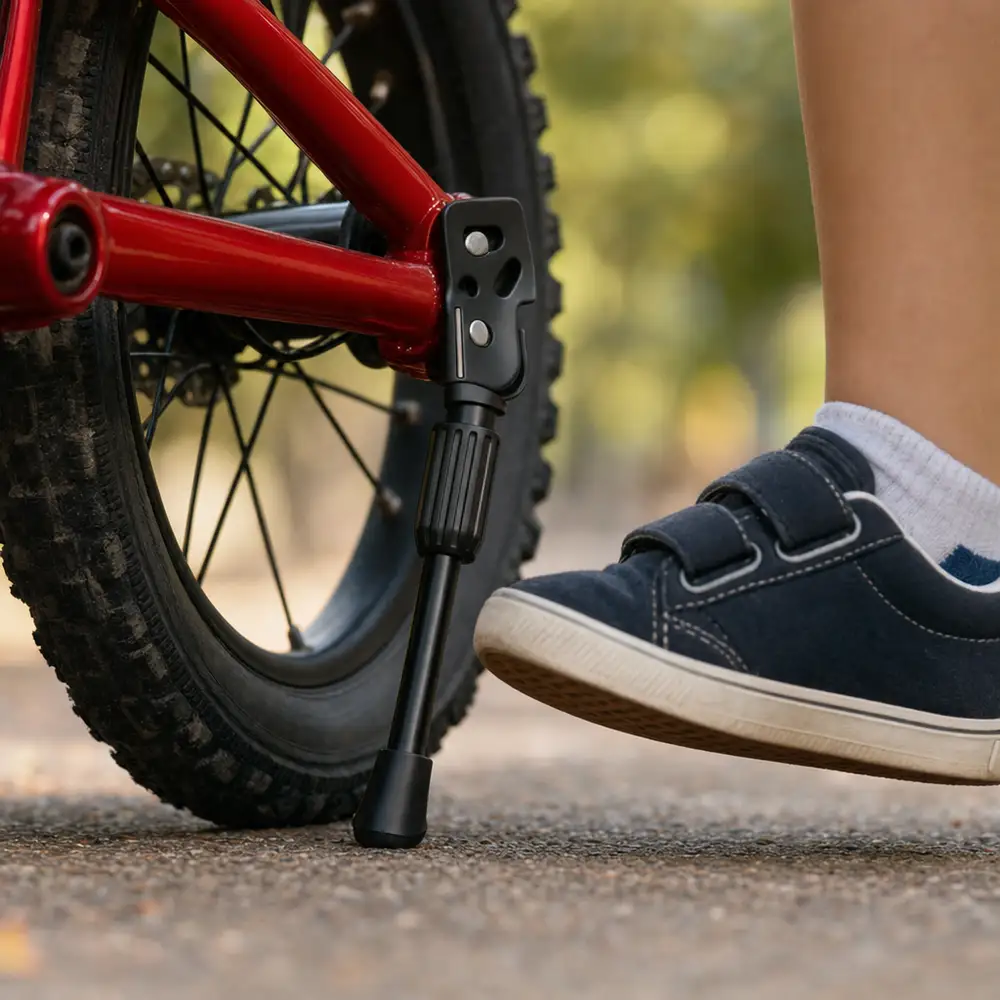
The demonstration takes a minute and sticks better than any amount of explaining. Stop the bike, both feet down. Push the stand down with the side of a heel until it stops. Then rock the bike gently back onto the leg so it takes the weight, and feel whether the foot settles or keeps going. A child who has felt a foot sink into a lawn once knows what soft ground feels like through the handlebars forever after. Add the wheel turn as the last step: stand down, wheel over, walk away.
One thing does get kicked harder on a child's bike than on anyone else's, and that is the stand itself, stamped down and knocked back up dozens of times a week by someone in a hurry. Choosing the length that matches the wheel is the other half of the job, set out in the sizing guide, with the two most common lengths on the 16 inch bike kickstand page and the 20 inch bike kickstand page.
Weight of the longest kickstand length, sized for 20 inch wheels, at 159 g
— Kickaroo product specification, 2026
The short version
None of it is specific to one bike or one length, and the one thing that has to be right before any of it applies is the lean angle itself, set at fitting time. The rest of the guides are listed on the blog index.
Give the bike somewhere to stand
Five fixed lengths for 12 to 20 inch wheels, and the adjustable aluminum stand for 20 to 29 inch wheels. Free shipping and 30 days to change your mind on both.
Choose your range and size