
Best Bike Kickstand: How to Pick the Right One
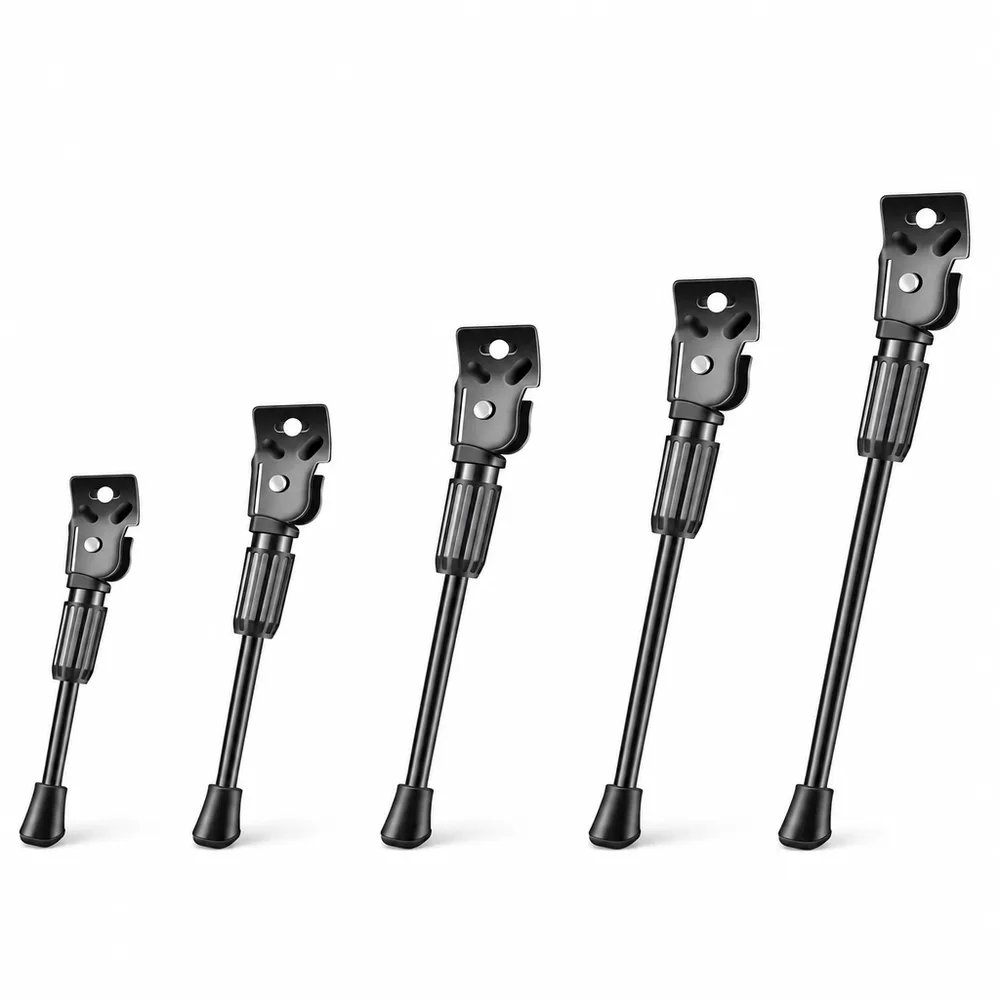
Best suggests a ranking, and a ranking is the wrong tool for this part. A kickstand is a lever that has to match one particular bike: the wheel under it, the frame it bolts to and the weight it is asked to hold. The stand that is exactly right on a 16 inch kids bike is simply the wrong part on a commuter, and the other way around.
So this guide sorts the decision by the bike rather than by the stand. Both Kickaroo ranges are covered, the five fixed kids lengths and the adjustable adult stand, and each section ends at the page where that stand is specified and sold, so that once you recognize your bike you also know where to go next.
The three questions that pick the stand for you
The tire does most of the work. Read the number on the sidewall, not the frame sticker and not the model name: 12 through 20 inches points at the kids range, 20 through 29 inches points at the adult range, and the overlap at 20 inches gets its own section further down. The rider matters because the two ranges are built for different lives. A stand on a kids bike is stamped down and kicked back up dozens of times a week, so those five stands are cut to one length with no moving joint to loosen. An adult bike is parked with more care but carries far more weight, so its stand adjusts once to the frame and then stays put.
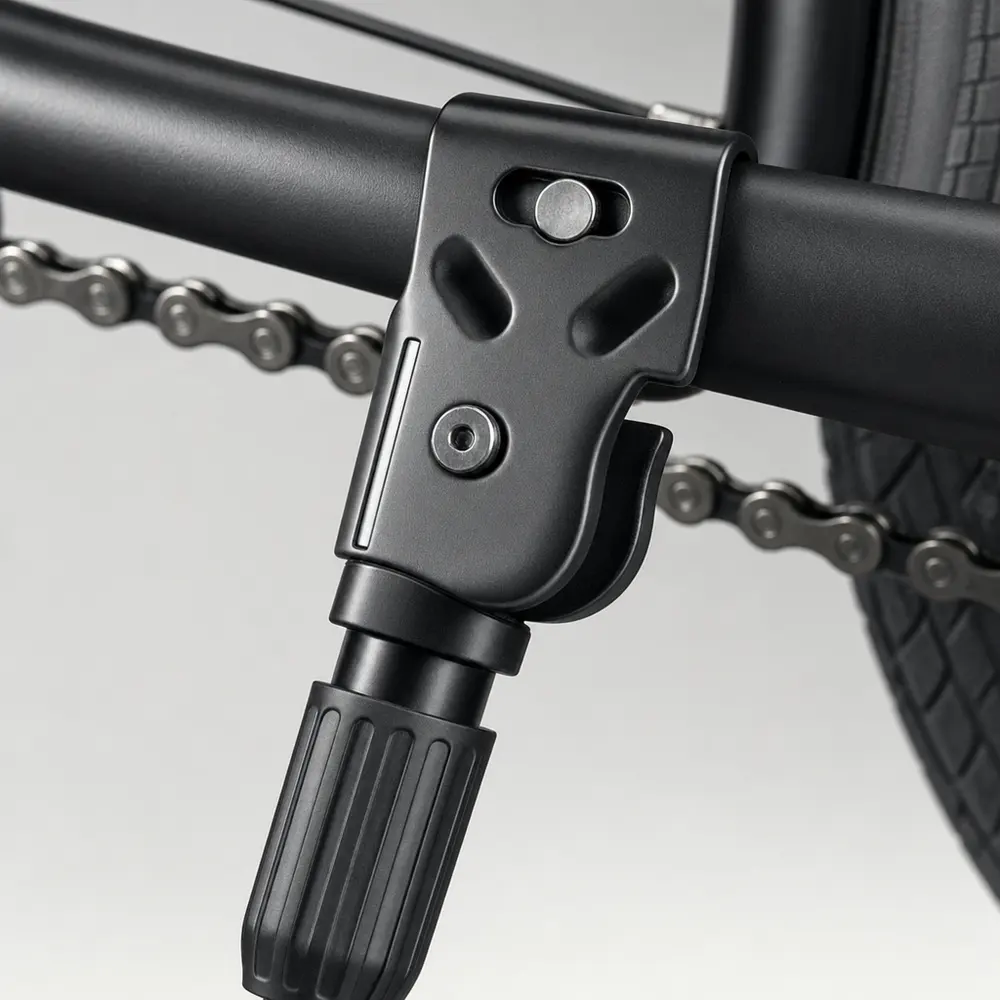
The third question is the one people skip. Both ranges bolt to a flat spot on the chainstay behind the crank, and most frames have one, but not all: many trail frames and some BMX frames give a stand nowhere to attach. Look before you order, and if what you find back there is ambiguous, the mountain bike kickstand guide walks through exactly what a usable mounting point looks like.
Wheel sizes covered by the two ranges, five fixed kids lengths plus the adjustable adult stand
— Kickaroo product specification, 2026
Kids bikes, 12 to 20 inch wheels: five fixed lengths
Fixed length is a deliberate choice for this range, not a missing feature. A part that gets kicked up and stamped down by a child in a hurry, every single day, is better off with nothing on it that can slide or work loose. Each length arrives cut for its wheel size, bolts to the chainstay through the same plate, and never needs setting up or resetting afterward.
Because the price does not change with the length, there is nothing to optimize and only one thing to get right. The full length chart, wheel by wheel, lives in the guide on what size kickstand fits a kids bike, along with the rule for a bike that sits between two sizes. And for households with two kids bikes, the two-stand pack mixes any two lengths in one order. If the question in your house is still whether a small bike needs a stand at all, that debate has its own guide too.
16 inch: the first size with nothing else holding the bike
Up to this point the bike could always rest on something, because the training wheels held it whether anyone thought about parking or not. The day they come off, the bike becomes a machine that falls over the moment a child lets go of it, and the 8.9 in stand for 16 inch wheels is the part that fixes that week.
One caution carries over from the workbench: 16 inch bikes are not all the same height off the ground, since tire depth and frame geometry vary from one to the next. The 16 inch bike kickstand page covers the quick measurement that confirms the fit, along with the full specification and photos from buyers who fitted this length on their own kids' bikes.
20 inch: the size that is really two decisions
The 18 in and 20 in stands are only an inch apart, 10.0 in against 11.0 in, and on a 20 inch frame that inch is the whole decision. Stand the bike upright, measure from the flat spot behind the crank straight down to the floor, and read that figure against the chart rather than trusting the number on the tire. The 20 inch bike kickstand page spells out that measurement step by step.
The BMX case deserves its own sentence, because 20 inch wheels and BMX overlap almost completely. Plenty of BMX frames take the stand without any drama, but some have no mounting point at all, so the ten second look behind the crank from the first section is not optional here. It is the difference between an order that bolts on in twenty minutes and a part with nowhere to go.
Adult bikes, 24 to 29 inch: the adjustable aluminum stand
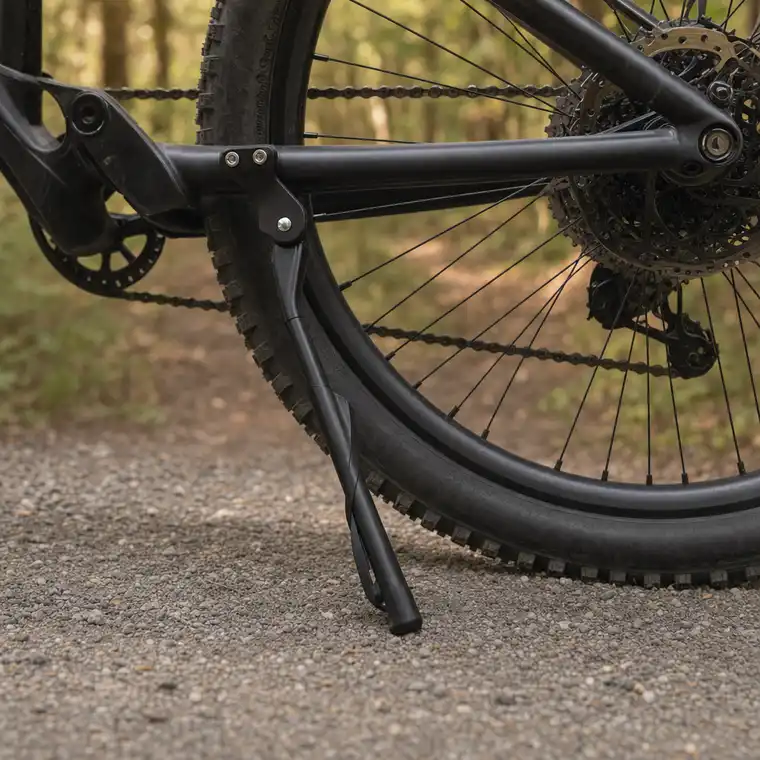
Adult bikes are where a single fixed length stops making sense, because a road frame, a hybrid and a 29er all put the chainstay at different heights. One adjustable leg covers all of them: pick the wheel range, set the length once with the bike upright, and the job is done. The stand ships with plate options to match what the frame offers, so the bracket you found behind the crank has a matching face waiting for it.
If it seems inconsistent that the kids range refuses adjustment while the adult range is built on it, that tension is the entire subject of adjustable versus fixed bike kickstands: what a telescoping joint buys you, what it costs, and why each range lands where it does.
E-bikes: the same stand, with the tire making the choice
An e-bike raises the stakes without changing the logic. The frame carries a battery and a motor, which makes it heavier to catch when it tips and more expensive when nobody catches it, so the stand under it is doing a more serious job than the same stand under a bare commuter. The aluminum leg is the part built for that job, so the whole family of heavier bikes lands on the adult range.
The one mistake buyers actually make here is ordering the wrong wheel range by guessing from the bike's overall size instead of reading the tire. The electric bike kickstand page covers the ten second sidewall check, the S and M ranges side by side, and what buyers report from their own e-bikes after fitting.
Weight of the adult stand, 0.397 kg, in thickened aluminum alloy
— Kickaroo product specification, 2026
Every bike in the household, one table
| The bike | The range | What settles the order |
|---|---|---|
| Kids bike, 12 or 14 inch wheels | Kids range, fixed length | The 12 in or 14 in stand, matched to the number on the tire sidewall |
| Kids bike, 16 inch wheels | Kids range, fixed length | The 16 in stand, after a quick check of the height under the frame |
| Kids bike, 18 or 20 inch wheels | Kids range, fixed length | Measure from the mounting point to the floor before choosing 18 in or 20 in |
| BMX with 20 inch wheels | Kids range, if the frame has a mounting point | Check behind the crank first: some BMX frames have nowhere to bolt a stand |
| Folding or small-wheel adult bike, 20 to 22 inch wheels | Adult range, adjustable | The S wheel range |
| Mountain, road or hybrid bike, 24 to 29 inch wheels | Adult range, adjustable | The M wheel range, plus the plate that matches your frame |
| E-bike | Adult range, adjustable | The tire decides: 20 to 22 in wheels take S, 24 to 29 in wheels take M |
Two patterns fall out of the table. Below 20 inches, everything is a kids bike and the only question is length. From 24 inches up, everything takes the adjustable stand and the only question is which plate and which wheel range. The 20 to 22 inch band in the middle is the only place where you have to look at the bike itself, and one measurement resolves it every time.
Average across 416 verified buyer ratings on the kids range and 1,099 on the adult range
— Kickaroo verified buyer ratings, 2026
The short version
Picking the best kickstand turns out to mean picking the right one, and the right one is decided by the bike in your garage rather than by anything on this page. Both ranges sit side by side on the home page with the size selector, and every length ships free with thirty days to change your mind.
Match the stand to the bike
Five fixed lengths for 12 to 20 inch wheels, and the adjustable aluminum stand for 20 to 29 inch wheels. Free shipping and a 30-day money-back guarantee on both.
Choose your range and size